Makharij Al-Huroof: The 5 Homes of Arabic Letters
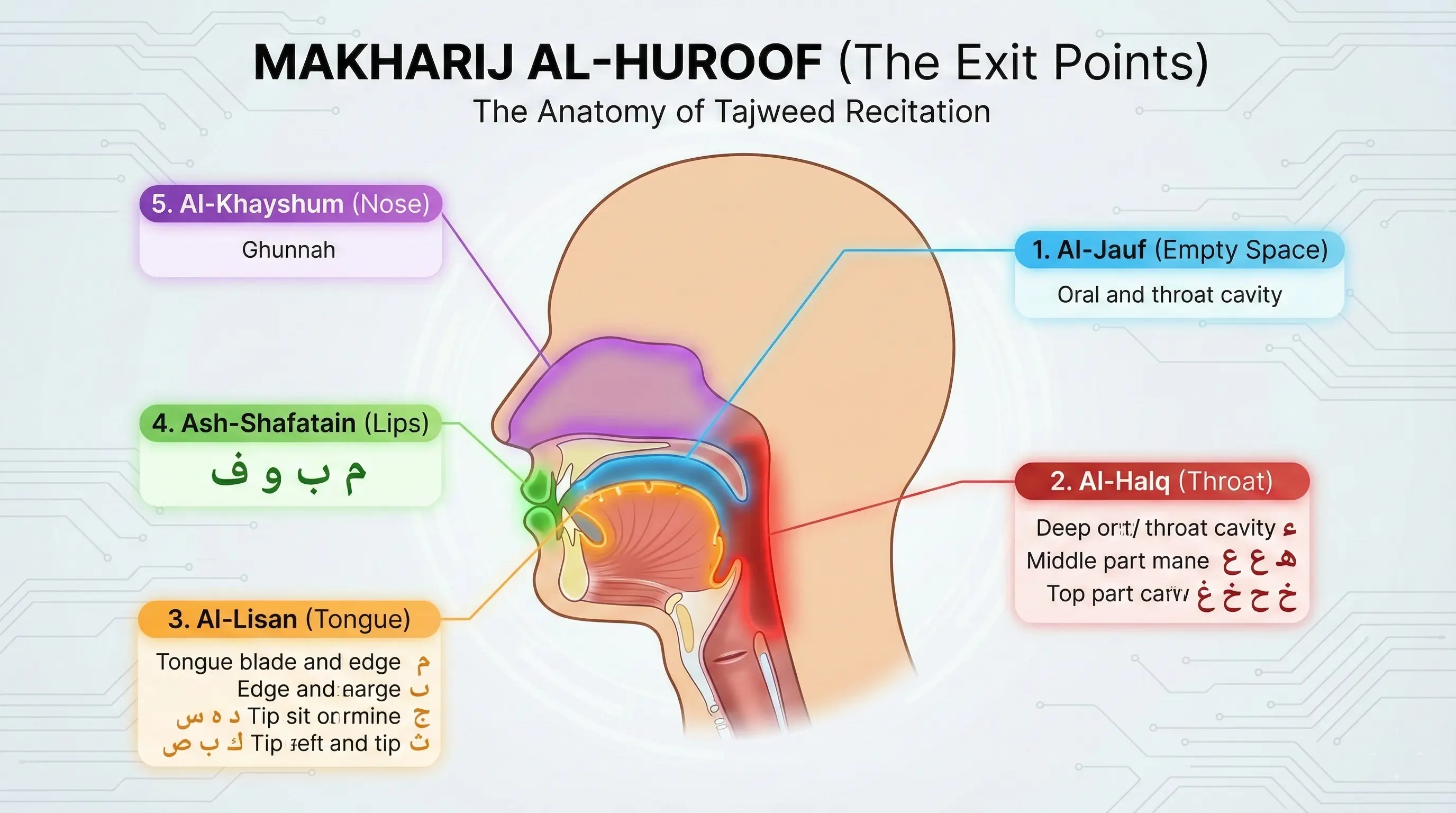
Imagine you are visiting a city where every person lives in a specific house. If you knock on the wrong door, you will not meet the person you are looking for.
In the same way, every Arabic letter has its own "home" inside your mouth and throat, known as its Makhraj. If a letter exits from the wrong place, it changes identity—just like a guest entering the wrong house.
👉 Pause and feel it now: Say "AA" (chest) vs "HA" (middle throat). The difference isn't the sound; it's the origin.
The 5 Main Areas (Homes of Letters)
Scholars of Tajweed, including Imam Ibn al-Jazari, grouped all letters into 5 main areas. Within these areas are 17 precise points.
1 Al-Jauf (Empty Space)
The open space of the mouth and throat. This is the home of the Madd letters (long vowels). The air flows freely here.
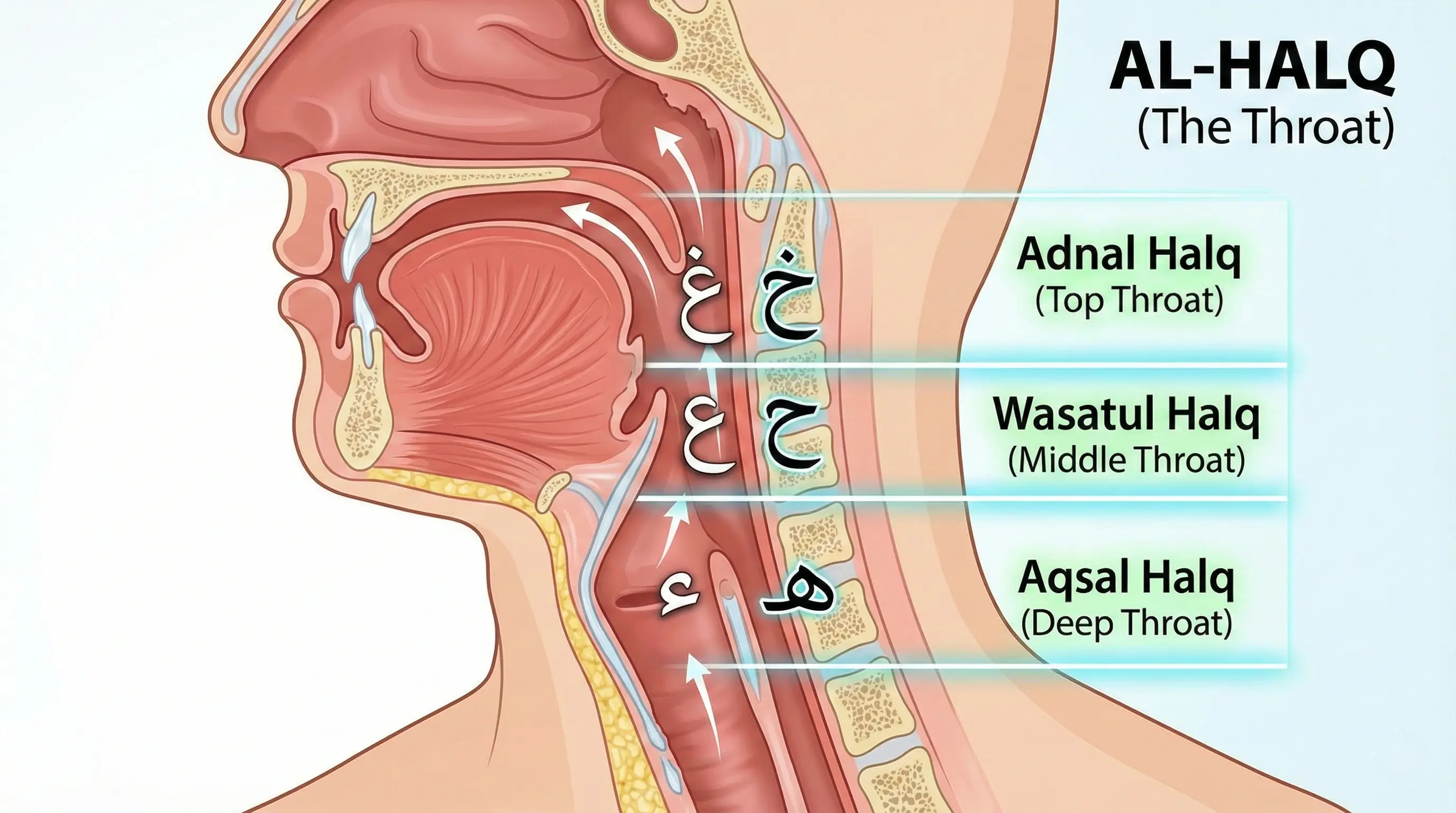
2 Al-Halq (The Throat)
The throat has 3 floors: Bottom, Middle, and Top. Six distinct letters emerge from here (like Ha, Ayn, Kha).
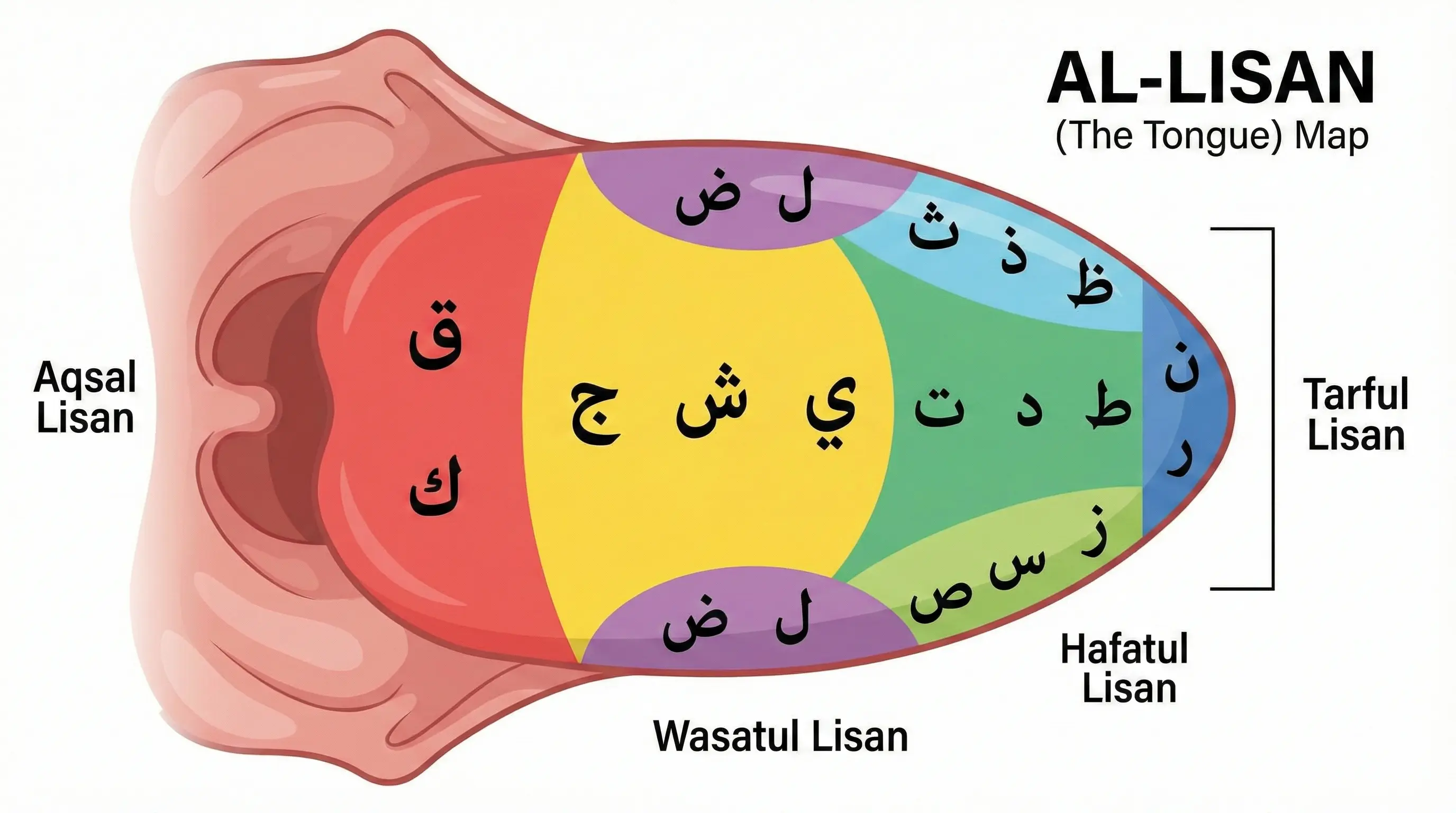
3 Al-Lisan (The Tongue)
The "King" of articulation. It has the most letters (18). It uses the Tip, Edges, Middle, and Deep Back.
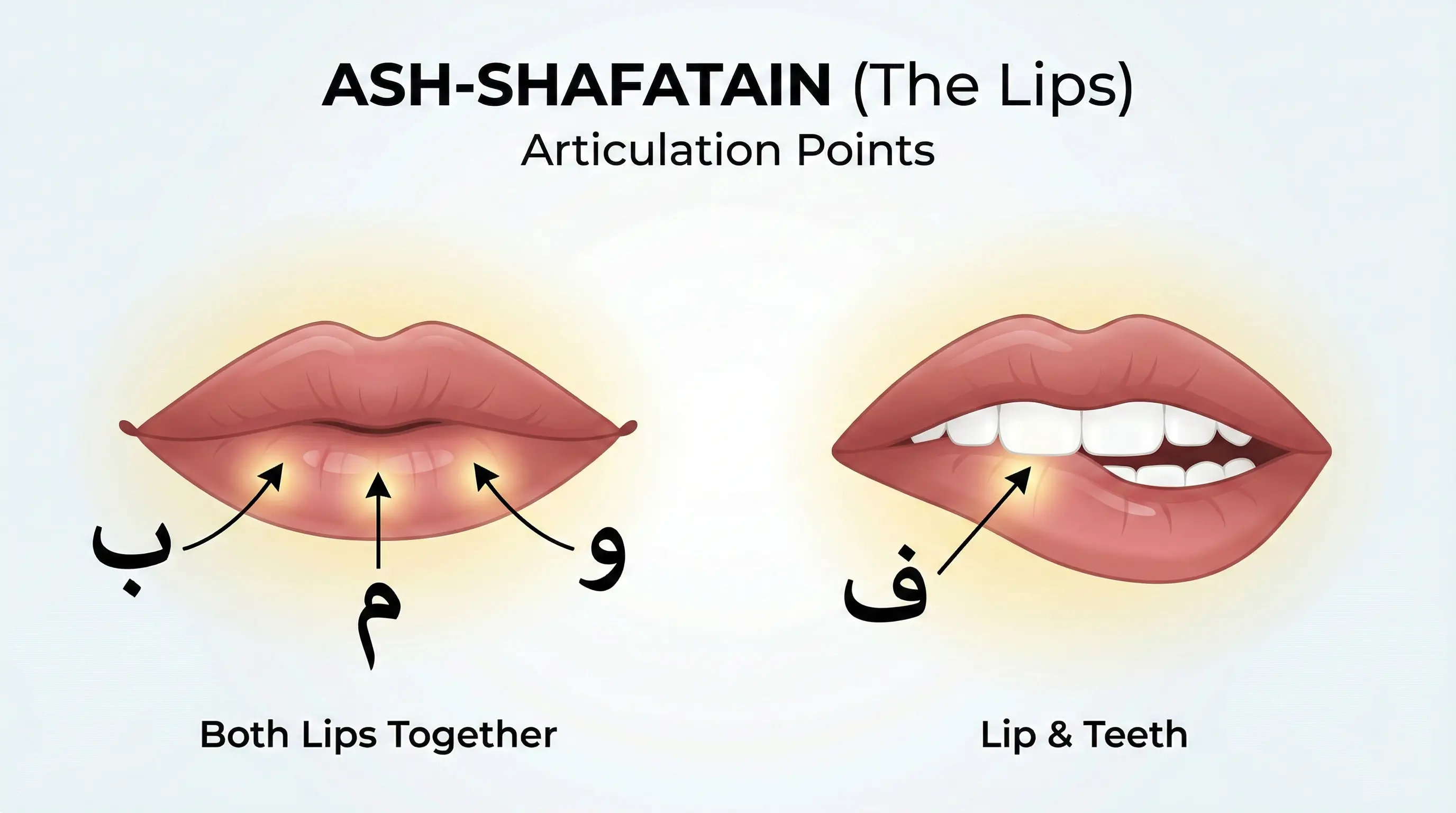
4 Ash-Shafatain (Lips)
The lips produce 4 letters: Ba, Meem, Waw, and Fa. Some require closing the lips, others require roundness.
5 Al-Khayshum (Nose)
The nasal passage. No specific letter "lives" here, but the Ghunnah (nasal sound) for Noon and Meem comes from here.
🧪 The "Sukoon Trick"
Don't just memorize diagrams. Find the Makhraj yourself with this scholar-approved method.
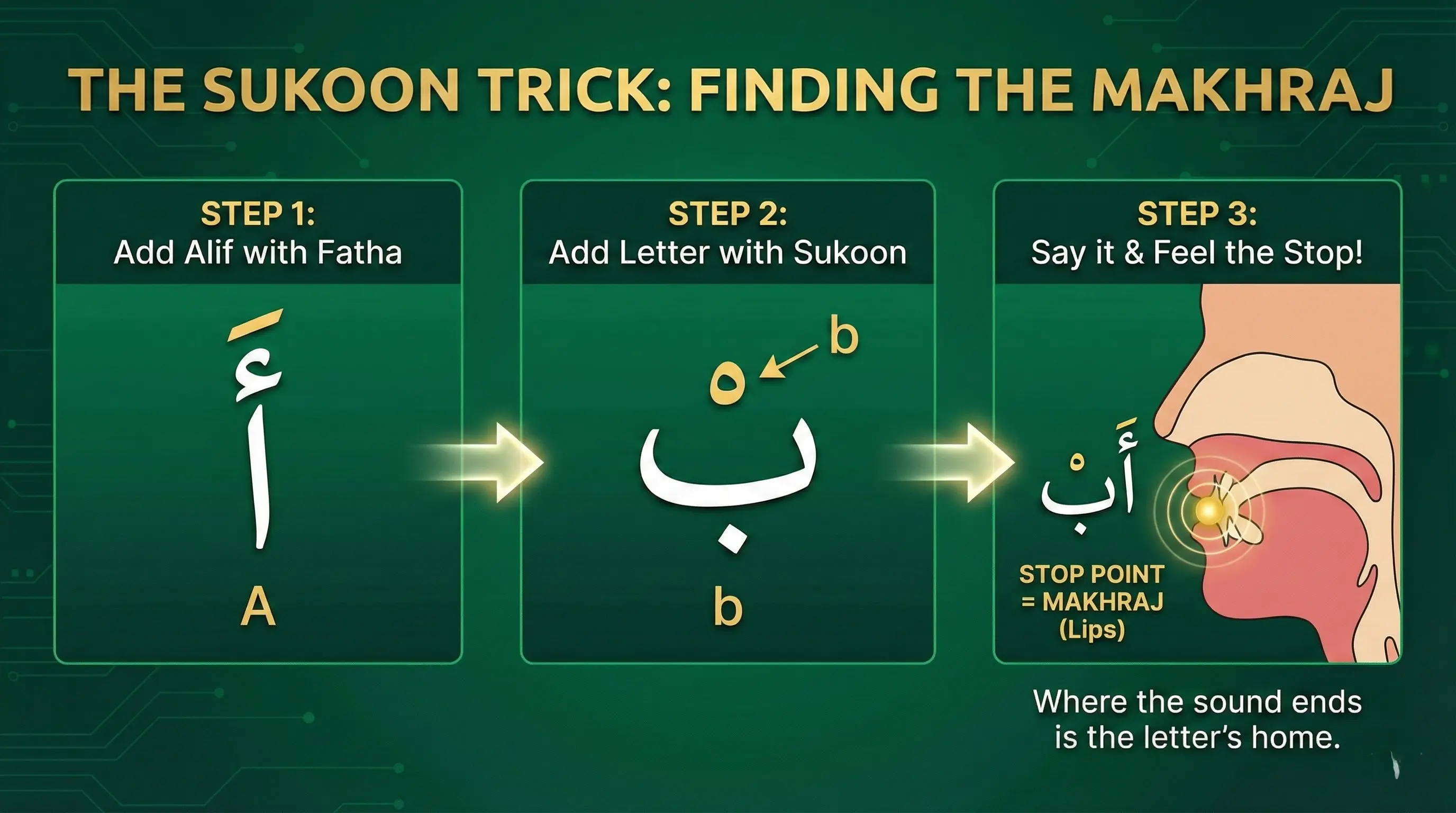
Step 1: Add an Alif with Fatha (A) before the letter.
Step 2: Put a Sukoon on the target letter.
Step 3: Pronounce them together. Where the sound stops = The Makhraj.
Example: To find "Ba", say "Ab". To find "Qaaf", say "Aq".